Hello, everyone. My name is Daichi, an expert providing the information about the radiation issues in an easy-to-understand manner.
In this article, it was explained that in prefectures other than Fukushima Prefecture, how remediation activities were implemented and how the soil arising from remediation is stored.
In addition, this article explained the summary of demonstration projects related to the disposal of removed soil that were implemented outside Fukushima Prefecture.
This article explains the disposal standards developed based on the demonstration projects, as well as future prospects.
In other words, this article will respond to the following questions:
– What are the disposal standards of removed soil?
– How will the removed soil generated outside Fukushima Prefecture be treated in the future?
Table of contents of this article
- (Disposal standards and future prospects are explained) Disposal of removed soil generated outside Fukushima Prefecture (Vol. 3)
- Disposal standards of removed soil generated outside Fukushima Prefecture
- Determining whether there is a risk of contamination of public water bodies and groundwater
- Prevention of the scattering and runoff of removed soil
- Preservation of living environment
- Surrounding enclosures and displays
- Measurement of air dose rates at the site boundary (monitoring)
- Creation and preservation of records and drawings
- Closure of the opening (measures taken upon completion of landfill)
- Other considerations
- Future prospect
- Summary
I have been involved with the radiation-relevant issues, like the policy on the decontamination activities and the management of the Interim Storage Facility, after the accident of the Fukushima Daiichi Nuclear Power Plant in 2011.
I received a doctorate in the field of radiation, while working in Fukushima.
- (Disposal standards and future prospects are explained) Disposal of removed soil generated outside Fukushima Prefecture (Vol. 3)
- Disposal standards of removed soil generated outside Fukushima Prefecture
- Determining whether there is a risk of contamination of public water bodies and groundwater
- Prevention of the scattering and runoff of removed soil
- Preservation of living environment
- Surrounding enclosures and displays
- Measurement of air dose rates at the site boundary (monitoring)
- Creation and preservation of records and drawings
- Closure of the opening (measures taken upon completion of landfill)
- Other considerations
- Future prospect
- Summary
(Disposal standards and future prospects are explained) Disposal of removed soil generated outside Fukushima Prefecture (Vol. 3)
First of all, the disposal standards for removed soil generated outside Fukushima Prefecture will be explained, followed by an explanation of future prospects for its disposal.
Disposal standards of removed soil generated outside Fukushima Prefecture
Disposal standards of removed soil generated outside Fukushima Prefecture were endorsed in the 11th Study Team on Disposal of Removed Soil (in Japanese) in January 2025, and the 22nd Review Meeting on Environmental Restoration (in Japanese) in February 2025, also taking account of the results of demonstration projects, followed by public comments, and published in March 2025 together with other guidelines (You can find the press release here (in Japanese).
You can now access the Guideline for Landfill Disposal that elaborates the disposal standards at the website of the Ministry of the Environment, Japan (in Japanese).
Now let’s take a look at the main points of the disposal standards in the following parts.
Determining whether there is a risk of contamination of public water bodies and groundwater
As the results of test project elaborated in this article represent, it has been confirmed that radioactive cesium contained in removed soil tends to strongly adsorb onto soil particles and is unlikely to dissolve into water.
The radioactivity concentration of removed soil generated outside Fukushima Prefecture is relatively low; therefore, the risk of migration to groundwater or public water bodies due to leaching is considered to be extremely low.
However, on an exceptional basis, the risk is assessed through a leaching test for radioactive cesium in cases where the concentration of radioactive cesium exceeds approximately 100,000 Bq/kg (for reference, the average concentration in removed soil generated outside Fukushima Prefecture is approximately 730 Bq/kg), or where the removed soil has been separated from decontamination waste.
Prevention of the scattering and runoff of removed soil
During landfill operations involving removed soil, care must be taken to prevent the scattering or runoff of soil outside the site due to wind or rain.
Specifically, the Guideline states that when removed soil is taken out of bags or containers, the work should be carried out carefully near the ground surface.
In cases where dust is likely to be generated, such as on windy days, measures such as spraying water or covering the landfill area with sheets should be implemented.
Preservation of living environment
Proper management of noise, vibration, and odor is required to ensure that landfill operations do not cause adverse impacts on the living environment of residents in surrounding areas.
Specifically, the Guideline states that periodic cleaning around the work area should be carried out to prevent the fall of soil and the generation of dust. In addition, measures to reduce noise should be implemented by using construction machinery with low noise and low vibration levels.
Surrounding enclosures and displays
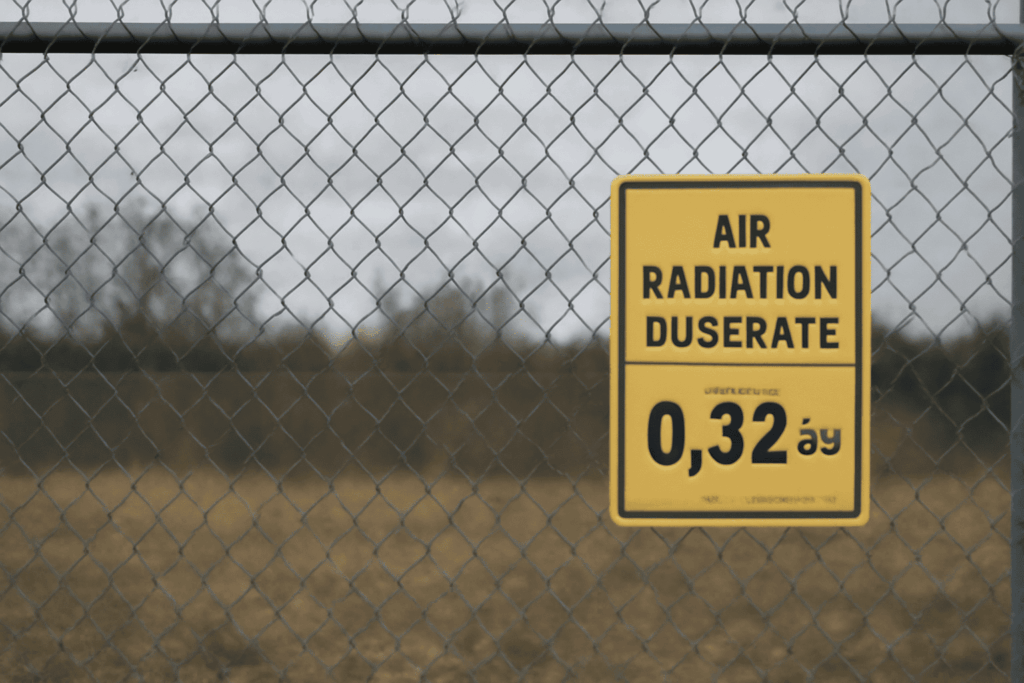
At landfill sites, enclosures are required to prevent unauthorized entry and the unintentional excavation of removed soil.
The enclosures can be set up using fences, railings, ropes, etc., or existing enclosures can be used.
In addition, signs indicating that the site is used for the landfill of removed soil, along with the contact information of the site manager, are required.
It is also stated that the results of air dose rate monitoring during and after landfill operations may be displayed on signs to help foster public understanding.
Measurement of air dose rates at the site boundary (monitoring)
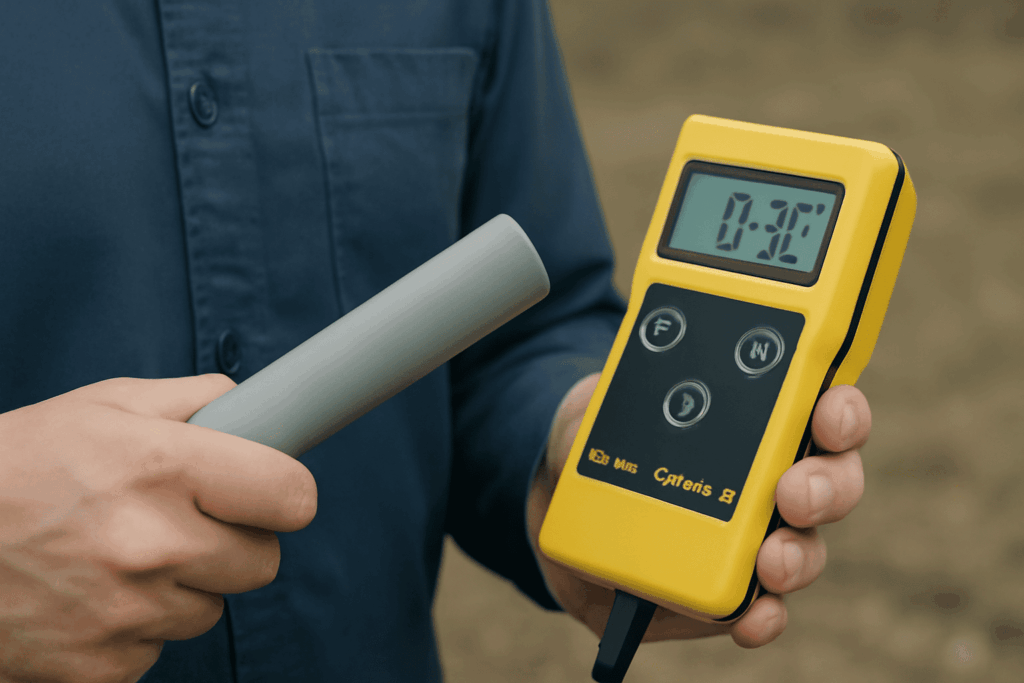
It is important to measure the air dose rate at the site before the placement of removed soil in order to understand the baseline conditions and to allow comparison with the situation during landfill operations and site management.
In addition, the air dose rate should be measured periodically (basically once a week) at the site boundary and other relevant locations to confirm that the transportation and landfill operations of removed soil do not have any impact on the surrounding environment.
After the completion of landfill operations, monitoring should continue at an appropriate frequency in order to confirm that there is no impact on the surrounding environment (If no fluctuation is observed compared with the pre-landfill level, the monitoring frequency may be reduced to about once a year). This monitoring should be conducted together with maintenance activities, including visual inspection of the cover soil.
In this regard, as part of risk communication, I think monitoring air dose rates with the involvement of local communities is a highly effective approach to enhancing their understanding and fostering a sense of ownership of this issue.
Creation and preservation of records and drawings
To ensure traceability in the disposal of removed soil and to support decisions on the completion of maintenance and management of landfill sites, it is required to record and retain information on the conditions before, during and after landfill operations, including photographs, until such maintenance and management is concluded. Examples of the information to be recorded are as follows:
– Drawings showing the locations of landfill areas
– The volume of removed soil placed in the landfill
– Records of monitoring, inspections, and surveys conducted for the maintenance of the landfill site
These records can be used to confirm safety in the event of a disaster or unavoidable changes in land use. They also serve as an important source of information for long-term management, particularly as the management of disposal sites may change over time.
Closure of the opening (measures taken upon completion of landfill)
After the completion of landfill operations, it is necessary to ensure long-term stability by appropriately closing the opening to prevent the scattering and runoff of removed soil.
Specifically, the disposal standards state that the landfill areas should be covered with at least 30 cm of soil.
In addition, at some landfill sites, unintentional land disturbance by human activities, excavation caused by animal intrusion, and land subsidence may occur.
Therefore, it is necessary to take appropriate measures, such as increasing the thickness of the cover soil, to ensure the safe long-term management of the landfill sites.
Other considerations

In the Guideline for Landfill Disposal, the following 11 items are presented as other considerations.
1 Communication with local communities
2 Consideration of landfill site location
3 Prevention of water intrusion (e.g. rainwater)
4 Acceptance and management of removed soil
5 Monitoring of radiocesium concentrations in removed soil
6 Safety management during landfill operations
7 Considerations during landfill operations
8 Handling of removed soil subject to the Ordinance on Prevention of Ionizing Radiation Hazards
9 Handling of soil separated from decontamination waste
10 Entry into landfill sites
11 Measures for hazardous substances
For some of these 11 items, their necessity needs to be determined on a case-by-case basis; however, all of them are important for the safe disposal and long-term management of removed soil.
In addition, it is stated that establishing a communication system and preparing initial response measures in advance, in the event of emergencies such as disasters, is essential for ensuring safety and for long-term management.
Future prospect
In March 2025, disposal standards and guidelines for the disposal of removed soil were published; therefore, it is expected that disposal will proceed in accordance with these.
Actually, in the 2nd Study Group on Technologies for Environmental Restoration (2nd Meeting) (in Japanese) in March 2026, it was reported that part of the removed soil in Ichinoseki City in Iwate Prefecture and all of the removed soil in Tokai Village in Ibaraki Prefecture were disposed of according to the disposal standards.
After the disposal of removed soil, it would proceed to the lifting of designation of the Intensive Contamination Survey Areas (ICSA).
As also touched on in this article, I think that the absence of the disposal standards has been one of the reasons for the delay in lifting of the designation of the ICSA outside Fukushima Prefecture.
I understand that, from a legal perspective, the lifting of the designation of ICSA outside Fukushima Prefecture is determined based on the reduction in the air dose rate (i.e. whether it is below 0.23 μSv/h).
In light of the progress in lifting the designation within Fukushima Prefecture, air dose rates in municipalities outside Fukushima Prefecture are considered to have decreased sufficiently to meet the relevant criterion.
However, the disposal of removed soil is undoubtedly the final stage of remediation; therefore, it is quite natural that each municipality thinks that the designation of ICSA cannot be lifted without the completion of disposal.
It is expected that lifting of designation of ICSA of the municipalities other than Fukushima Prefecture will be accelerated based on this disposal standards, as 15 years have already passed since the disaster.
Summary
In this article, as a summary, the disposal standards of removed soil generated outside Fukushima Prefecture established in March 2025, as well as future prospect were elaborated.
This issue has been discussed for a long time since shortly after the accident, and the disposal standards have finally been developed after considerable discussion.
I hope that, based on these disposal standards, the disposal of removed soil generated outside Fukushima Prefecture and the lifting of the designation of ICSA will make progress.
By the way, above-mentioned contents are summarized in the following videos.
– Japanese version
(Published at a later date)
– English version
(Published at a later date)
You can read the same article in Japanese here.
Thank you very much for reading this article.
See you next time!


コメント