Hello, everyone. My name is Daichi, an expert providing the information about the radiation issues in an easy-to-understand manner.
When you think of areas where decontamination in Japan has been carried out, what is the first area that comes to mind?
For most people, the first thing that comes to mind is Fukushima Prefecture, home to the Fukushima Daiichi Nuclear Power Station (FDNPS).
Of course it is correct, but decontamination activities were implemented also in prefectures other than Fukushima Prefecture.
In these prefectures, soil and waste were of course generated through decontamination and treatment of the soil and waste has been conducted, including their storage.
Among the treatment, I would like to especially focus on disposal of removed soil, but in this article, as a preliminary step, current status of decontamination and storage of removed soil generated during decontamination outside Fukushima Prefecture will be elaborated.
In other words, the following questions will be responded.
– How was decontamination conducted outside Fukushima Prefecture?
– How is the soil arising from decontamination currently stored?
Table of contents of this article
- (Let’s summarize the history and current status) Disposal of removed soil generated outside Fukushima Prefecture (Vol. 1)
- Decontamination activities outside Fukushima Prefecture
- Category of soil and waste arising from decontamination activities
- Status of storage of removed soil outside Fukushima Prefecture
- Summary
I have been involved with the radiation-relevant issues, like the policy on the decontamination activities and the management of the Interim Storage Facility, after the accident of the Fukushima Daiichi Nuclear Power Plant in 2011.
I received a doctorate in the field of radiation, while working in Fukushima.
- (Let’s summarize the history and current status) Disposal of removed soil generated outside Fukushima Prefecture (Vol. 1)
- Decontamination activities outside Fukushima Prefecture
- Category of soil and waste arising from decontamination activities
- Status of storage of removed soil outside Fukushima Prefecture
- Summary
(Let’s summarize the history and current status) Disposal of removed soil generated outside Fukushima Prefecture (Vol. 1)
So, after summarizing the status of decontamination outside the Fukushima Prefecture, I would like to explain the current situation of storage of removed soil arising from decontamination.
Decontamination activities outside Fukushima Prefecture
As covered in this article, outside Fukushima Prefecture, 63 municipalities in Iwate, Miyagi, Ibaraki, Tochigi, Gunma, Saitama and Chiba Prefectures were designated as the Intensive Contamination Survery Area (ICSA), and necessary decontamination was implemented.
In ICSA, the full-scale decontamination was completed by the end of March 2018, and air dose rate decreased due to physical decay, so the number of municipalities of ICSA is 55 as of the end of September 2025.
On the other hand, in Fukushima Prefecture, initially 41 municipalities were designated as ICSA, but as of the end of Septebmer 2025, the number of ICSA decreased to 9.
In Fukushima Prefecture with higher contamination level, faster progress has been made for the lift of designation of ICSA: this is related to the disposal of removed soil, and this will be explained in the next article.
Category of soil and waste arising from decontamination activities
Stuff generated through decontamination can be categorized into ‘soil’ and ‘waste’.
Internationally ‘soil’ and ‘waste’ are not separately categorized, but instead both of them are regarded as ‘waste’.
However, in Japan they are clearly distinguished, also taking into account the category in the existing Waste Management and Public Cleansing Act.
Soil arising from decontamination is called officially ‘removed soil’, and waste arising from decontamination is called officially ‘removed waste’, and sometimes they are called together ‘removed soil etc.’.
Among them, ‘removed waste’ is legally categorized into ‘the Specified Municipal Waste’ and ‘the Specified Industrial Waste’ and treated based on the treatment standard beyond the treatment standard stipulated in the Waste Management and Public Cleansing Act, and they are treated appropriately in the waste treatment facilities that meet the standard.
On the other hand, for ‘removed soil’, there had been no standard for its treatment, and it had been stored on-site for a long time.
With this in mind, this article will cover only ‘removed soil’, and removed waste is outside the scope of discussion.
And also as an important premise, in some prefectures other than Fukushima Prefecture, there are temporary storage sites, where removed soil and waste are temporarily stored that were generated during decontamination in certain areas, but there is no facility like the Interim Storage Facility (ISF), which has managed removed soil and waste in an integrated manner that have been generated within a prefecture (For the ISF please visit this article, this article, this article and this article).
Therefore, in regions without temporary storage sites, removed soil and waste have been managed, for example, under the ground of decontaminated sites (so-called on-site storage), in a somewhat dispersed manner.
Status of storage of removed soil outside Fukushima Prefecture
Based on the data in this website (in Japanese), Figure 1 was created to show the amount of storage of removed soil in each prefecture.
Total amount of storage is about 330,000m3, and among that Tochigi Prefecture occupies about one-third, followed by Chiba Prefecture of about 30%.
By the way, as elaborated in this article, the amount of removed soil and waste generated through decontamination activities in Fukushima and transported to the ISF is about 14,000,000m3.
It is not able to compare simply, but taking account of the fact that among the waste that are transported to the ISF, there are waste resulting from incineration outside the premise of the ISF, but also taking account of the amount of waste arising from decontamination outside Fukushima Prefecture (about 140,000m3), the amount of soil and waste arising from decontamination in Fukushima Prefecture is around 30 times as much as that of outside the Fukushima Prefecture (14,000,000/(330,000+140,000)≒30) (Please note that this is the rough number to undersand the scale of the difference of volume of soil and waste).
One of the reasons for this difference is that in Fukushima Prefecture, compared to other areas, contamination level higher and contaminated areas are much larger, so the approach taken in Fukushima Prefecture for decontamination activities is different with other areas.
Specifically, in Fukushima Prefecture, in a lot of municipalities the approach to remove top soil in farmlands and garden in houses has been taken, but outside Fukushima Prefecture, basically this approach was not taken, and instead in the places with locally high air dose rate, like so-called hot-spots, for example, removal of soil was implemented.
I think that this is also one of the reasons, why the amount of removed soil and waste is different between within and outside Fukushima Prefecture.

Figure 1 Amount of storage of removed soil in each prefecture (as of the end of March 2025)
In addition, based on the same data with the Figure 1, the number of storage sites of removed soil in each prefecture is represented in the Figure 2.
With regard to the number of storage sites, there are around 29,000 storage sites and you can find out that Tochigi Prefecture occupies around 86%.
Chiba Prefecture occupies the second largest proportion of 6%, that means, that there are significantly a number of storage sites in Tochigi Prefecture, in other words, it can be assumed that the removed soil and waste are stored in each decontaminated site in a dispersed manner.
I think that each approach has advantages and disadvantages but we can understand that in other prefectures, especially in Chiba Prefecture, removed soil and waste are managed relatively in a centralized manner.
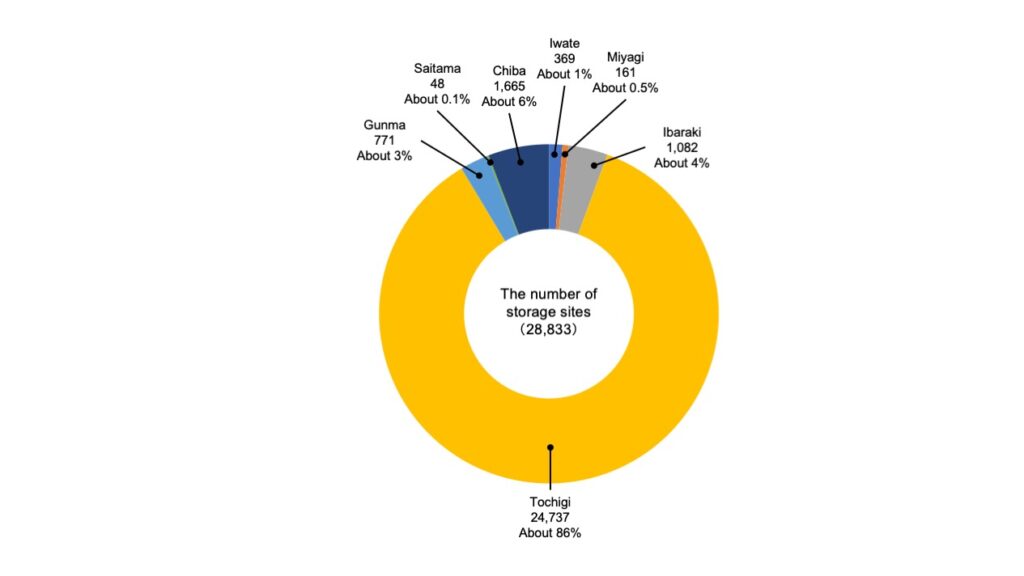
Figure 2 The number of storage sites of removed soil in each prefecture (as of the end of March 2025)
For the next, based on the materials of the Study Team on Disposal of Removed Soil, the amount of storage and the number of storage sites in each category of landowner are represented in the Figure 3 and 4.
As shown in the Figure 3, from the perspective of the amount of storage, you can see that about 80% of the removed soil is stored in the public lands owned by the national government, prefectures and municipalities.
You can also see that public lands owned by municipalities occupy about 65%, because municipalities are main implementor of decontamination in the ICSA.
I believe that in some cases, the national and prefectural governments are storing removed soil generated during the decontamination of national and prefectural land.
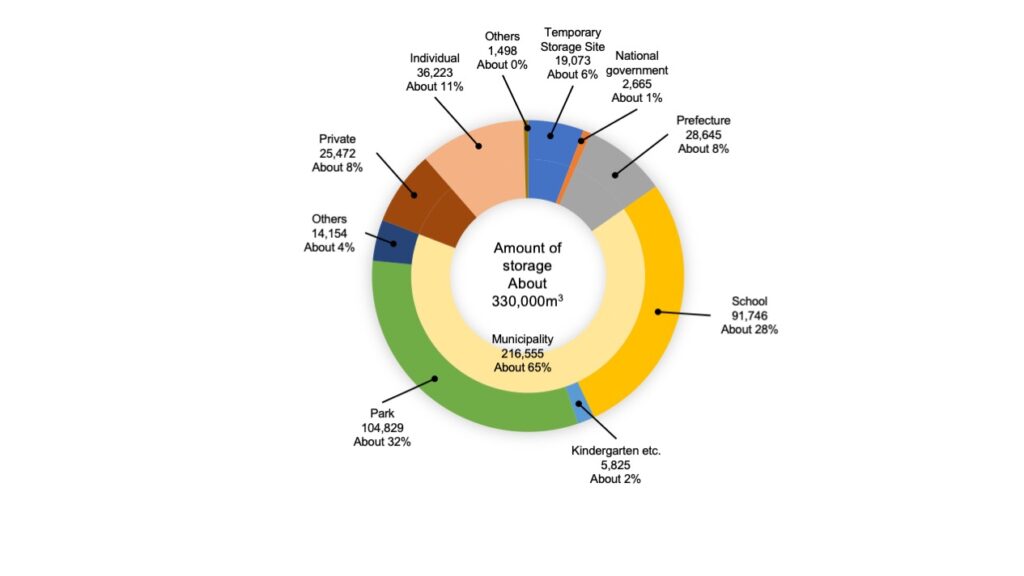
Figure 3 The amount of storage of removed soil by each category of landowner (as of the end of March 2024)
On the other hand, from the perspective of the number of storage sites, as shown in the Figure 4, you can see that about 90% of removed soil is stored in private lands like personal lands and lands of private companies.
I think that removed soil has been stored in a dispersed manner with small amount of soil in private lands, because the removed soil generated in the private lands is stored in the decontaminated land (e.g. underground).
You could understand the different situation with municipalities in Fukushima Prefecture, where the soil generated in private lands are collected in temporary storage sites, followed by transportation to the ISF.
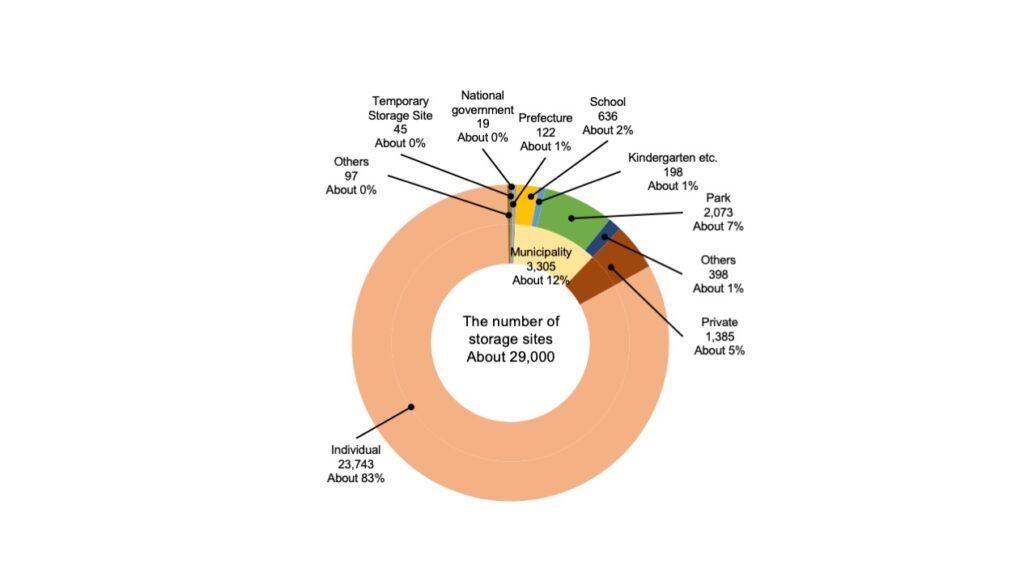
Figure 4 The number of storage sites of removed soil by each category of landowner (as of the end of March 2024)
The status of small-scale and dispersed storage is shown in the following Figure 5.
The number of storage sites is about 29,000 and sites with 10m3 or less occupy more than 90%.
Volume of a storage container like a flexible container is around 1m3, therefore, it means that they have 10 containers or less.
There were temporary storage sites with thousands of, tens of thousands containers in Fukushima Prefecture, so you may understand that scale of storage sites outside Fukushima Prefecture is quite small.

Figure 5 The number of storage sites of removed soil by scale (as of the end of March 2024)
Summary
This article covered the current status of decontamination and storage of resulting removed soil outside Fukushima Prefecture.
Decontamination was completed by March 2018 including prefectures outside Fukushima Prefecture, and currently removed soil of around 330,000m3 is stored in around 29,000 sites.
In terms of the amount of storage, most of them are stored in public places, and on the other hand, in terms of the number of storage sites, many of them are stored in private places, and they are mostly stored with 10m3 or less per storage site.
By the way, above-mentioned contents are summarized in the following videos.
– Japanese version
(Published at a later date)
– English version
(Published at a later date)
You can read the same article in Japanese here.
Thank you very much for reading this article.
See you next time!


コメント